
Projects
Demonstrating PMSC compliance at Northern Lighthouse Board’s Oban base
Harbours & ports, MaritimeApplying the Port and Marine Facilities Safety Code
How Marex helped the Northern Lighthouse Board’s Oban base achieve regulatory compliance by consolidating dispersed systems into a clear, structured and auditable Marine Safety Management System.
When regulatory frameworks evolve, organisations must adapt quickly to demonstrate compliance while maintaining operational efficiency.
For the Northern Lighthouse Board’s Oban base, this meant translating complex, dispersed systems into a clear, auditable Marine Safety Management System.
With a firm grasp of the Port and Marine Facilities Safety Code (PMSC) and a pragmatic, collaborative approach, Marex delivered a solution that brought clarity, structure and confidence.
The story of the Northern Lighthouse Board
The Northern Lighthouse Board (NLB) is the General Lighthouse Authority responsible for the waters surrounding Scotland and the Isle of Man. Since 1786, it has provided a vital safety service to mariners, overseeing and managing an extensive network of navigation aids.
Today, NLB operates and maintains 208 lighthouses and 174 buoys, in addition to providing radio aids to navigation. It also plays a regulatory role, ensuring that other aids-to-navigation providers - including port authorities - meet international standards.
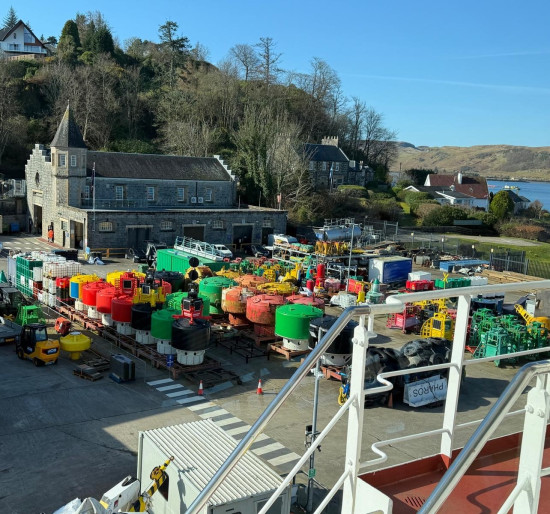
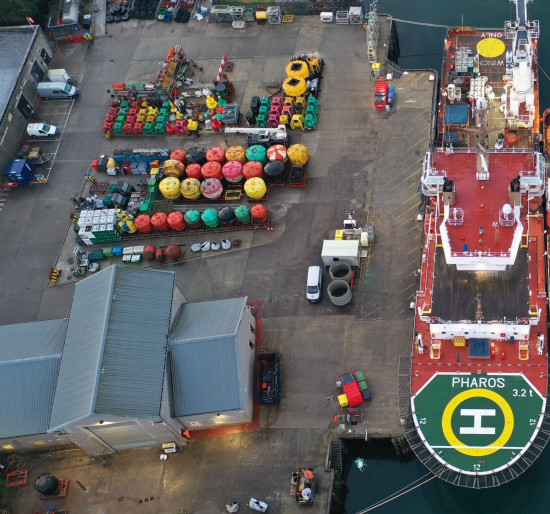
One of its key operational hubs is in Oban, which serves as a port facility for its vessels, NLV Pharos and NLV Pole Star and accommodates visiting cruise ships.
From here, NLB supports buoy maintenance, lighthouse resupply and inspection of offshore navigation aids, including those on oil and gas installations.
The challenge of PMSC compliance at Oban
As part of its regulatory obligations, NLB is required to demonstrate compliance with the Port and Marine Facilities Safety Code (PMSC).
With a new reporting window opening in early 2026, the Oban base needed to show it could clearly evidence its compliance.
Recent updates to the Code had extended its scope, introducing additional requirements for smaller marine facilities such as Oban. This meant that previous approaches to compliance were no longer sufficient, and gaps needed to be identified and addressed.
NLB needed a dedicated Marine Safety Management System (MSMS) that would consolidate, clarify and evidence compliance, while remaining practical and aligned with existing operations.
Why the Northern Lighthouse Board chose Marex
The Northern Lighthouse Board selected Marex for its deep understanding of the PMSC and its track record in supporting ports and marine facilities of varying sizes.
Crucially, Marex offered not just technical compliance expertise, but a pragmatic approach that bridged the gap between regulatory requirements and real-world operations.
Marex’s ability to interpret complex standards, identify gaps and translate them into workable, site-specific systems gave the organisation confidence that the solution would be both robust and usable.
How Marex responded
Marex began by conducting an external audit against the PMSC Aide-memoire (Annex A – A Guide to Good Practice). This review was conducted on behalf of NLB’s Designated Person to establish a baseline. This provided a clear, structured assessment of current compliance levels and formed the foundation for the work that followed.
Using the audit findings, Marex developed a tailored Marine Safety Management System for the Oban base.
A key part of the approach was making sure the system did not duplicate or complicate existing organisational processes. Instead, it intelligently referenced relevant documentation from wider NLB systems, creating a streamlined and integrated framework.
Where gaps were identified - such as the absence of a specific Marine Safety Plan - Marex worked collaboratively with NLB to develop new procedures aligned with both the Code and operational realities.
Regular engagement with the Marine Operations Manager ensured accuracy, relevance and buy-in at every stage.
Drawing on experience from other ports and smaller marine facilities, Marex introduced practical best practices and established a framework for ongoing internal audits, helping to embed compliance as a continuous process rather than a one-off exercise.
What went right – and what went wrong
A major success of the project was the collaborative working relationship. Regular workshops and discussions ensured that the system accurately reflected how the Oban base operates in practice, rather than imposing theoretical processes.
One of the key challenges was navigating the complexity of existing information.
Relevant procedures and evidence were often embedded within wider corporate systems, making them difficult to locate, interpret and align with PMSC requirements.
Marex addressed this by carefully mapping these elements and creating clear cross-references, avoiding unnecessary duplication while ensuring traceability.
Another challenge was ensuring that new procedures fitted seamlessly into established ways of working. By maintaining close communication with operational staff, Marex ensured that solutions were practical, proportionate and readily adopted.
The results
The four-month project delivered a clear, structured and fully tailored Marine Safety Management System for the Oban base - on time, to budget and in a format that is easy to understand and maintain.
The primary outcome is the Northern Lighthouse Board was able to confidently report its compliance as required for the 2026 reporting window, fully assured that it possesses the verifiable evidence to back it up. The system provides clarity for internal stakeholders and assurance for external regulators such as the Maritime & Coastguard Agency.
Importantly, the work has also established a foundation for continuous improvement, with a framework for future audits and ongoing compliance management.
Marex managing director Wayne Henderson said: “This project is a great example of how we help clients cut through complexity. By combining technical expertise with a practical approach, we were able to create a system that genuinely works for the client - not just on paper, but operationally.”

Donna Van Damme Senior marine consultant
Company Registration 00793999
MAREX
Neo House
Riverside Drive
Aberdeen, AB11 7LH