
Projects
A definitive answer to offshore dangerous goods compliance
Renewables, MaritimeHow Marex resolved the conflict between dangerous goods transport and technician capacity for a major renewables fleet.
When a crew member raised concerns about carrying compressed nitrogen alongside passengers, Marex provided the technical expertise needed to navigate complex dual-coding regulations.
The client and the challenge
In the fast-moving renewable energy sector, operational clarity is vital for maintaining both safety and project timelines.
A major offshore wind farm operator faced a complex regulatory query from its fleet: could carrying dangerous goods limit the number of technicians they could transfer to offshore turbines?
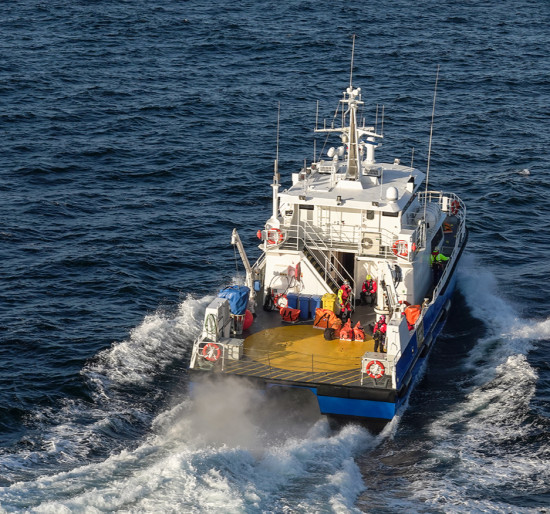
The specific challenge involved the transportation of compressed nitrogen bottles, which are essential for offshore maintenance work. The operator’s fleet of Crew Transfer Vessels (CTVs) typically operates under “dual coding” - meaning they can be classified as either a workboat or as a high-speed offshore service craft.
Because each code carries different restrictions on passenger numbers and dangerous goods documentation, the client needed a definitive answer.
They had to know if they could continue carrying their maximum capacity of 24 technicians while simultaneously transporting 38-litre nitrogen bottles, or if they were facing a forced reduction in efficiency.
Marex marine expertise
As Marex already provides regular audits on this fleet, our marine consultants had the necessary data and certification history at their fingertips. This familiarity with the client’s long-term charter vessels allowed for a rapid, highly specific analysis that a generalist consultancy could not provide.
Navigating the coding can prove confusing. Our consultant identified that while most vessels held a Document of Compliance (DoC) for dangerous goods as one type of vessel, the standards for carrying the same goods as the other are far more rigorous and often deemed too costly for standard operators.
The result: safety, assurance and compliance
Marex provided a clear, two-tiered solution to resolve the confusion.
In order to carry 38-litre nitrogen bottles, the client could either:
- use the vessel as a workboat while carrying the dangerous goods. The vessel would then be able to carry up to 12 industrial personnel but no passengers.
- make sure vessels have a dangerous goods DoC to enable them to carry dangerous goods as a high-speed offshore craft.
Information is only valuable if it is understood by those on the front line. Marex did not simply deliver a report; we made sure the findings were integrated into the client’s operational culture.
Our consultant produced a comprehensive 16-page technical guidance document and held face-to-face briefings with the Marine Assurance Manager and site deputies. By explaining the nuances of the certifications, Marex enabled the client to make informed commercial decisions about their charter requirements.
By choosing Marex, the operator secured:
- Operational clarity: a clear understanding of which vessels in the fleet could carry nitrogen without compromising technician throughput
- Regulatory confidence: guidance endorsed by technical experts that stands up to maritime audits
- Risk mitigation: specific advice on personnel training and awareness to ensure all crew members understand the limits of their vessel’s coding
Marex deftly identified the path forward, ensuring that compressed nitrogen - and the technicians who use it - could reach the offshore site safely and legally.
Do you have a complex maritime compliance query? Find out more about our marine assurance services here.

Donna Van Damme Senior marine consultant
Company Registration 00793999
MAREX
Neo House
Riverside Drive
Aberdeen, AB11 7LH